
Manufacturing is constantly undergoing a complete cognitive shift. As we move through 2026, the conversation has shifted from “if” we use AI to “how” we scale it. From agentic supply chains that self-heal to digital twins that actively optimize production, the best AI tools for the manufacturing industry are those that bridge the gap between the physical and digital worlds.
To help you navigate this shift, we have analyzed several realistic and authentic datasets to bring you the definitive list of the best AI tools for the manufacturing industry right now.
Best AI Tools for Manufacturing Industry
Here are the top 10 platforms and solutions redefining the factory floor.
- Siemens & NVIDIA (Industrial AI Operating System): Transforms digital twins into real-time, AI-driven production intelligence across the entire manufacturing lifecycle.
- MakinaRocks (Runway Platform): Delivers end-to-end AI lifecycle management with advanced predictive maintenance and intelligent design analysis capabilities.
- Nexus (Autonomous Process Optimization): Enables closed-loop production control by autonomously tuning industrial systems in real time.
- Phaidra (Energy-Efficient Process Control): Uses reinforcement learning to reduce energy consumption while maintaining stable and efficient plant performance.
- Praxie (AI-Based Production Scheduling): Optimizes factory schedules dynamically by adjusting to live production disruptions and constraints.
- Instrumental (Automated QA Agent): Applies vision AI to detect evolving product defects and feed corrective insights directly into production lines.
- Dataiku (Workforce & Knowledge Transfer): Captures institutional expertise through generative AI agents that turn operational data into accessible knowledge.
- Arkestro (Procurement Intelligence): Enhances sourcing decisions with predictive analytics that optimize pricing and supplier strategies in real time.
- Cognex Vision AI (Machine Vision Quality Control): Leverages deep learning vision systems to detect subtle defects at high production speeds with exceptional accuracy.
- MakinaRocks (Vision AI for Welding & Defects): Automates complex defect detection in processes like welding using deployable AI inspection solutions.
Top 10 Best AI Tools for Manufacturing Industry
1. Siemens & NVIDIA: Industrial AI Operating System

If there is one partnership defining the new industrial revolution, it is Siemens and NVIDIA. At CES 2026, they unveiled the Industrial AI Operating System, a foundation intended to embed AI across the entire lifecycle, from design to the shop floor. This is one of the best AI tools for manufacturing industry because it turns passive digital twins into “active intelligence.” By leveraging NVIDIA Omniverse and Siemens’ automation portfolio, factories can simulate changes in real-time and deploy them instantly. Early adopters like PepsiCo have reported a 20% increase in throughput using Siemens’ Digital Twin Composer.
2. MakinaRocks: Runway Platform
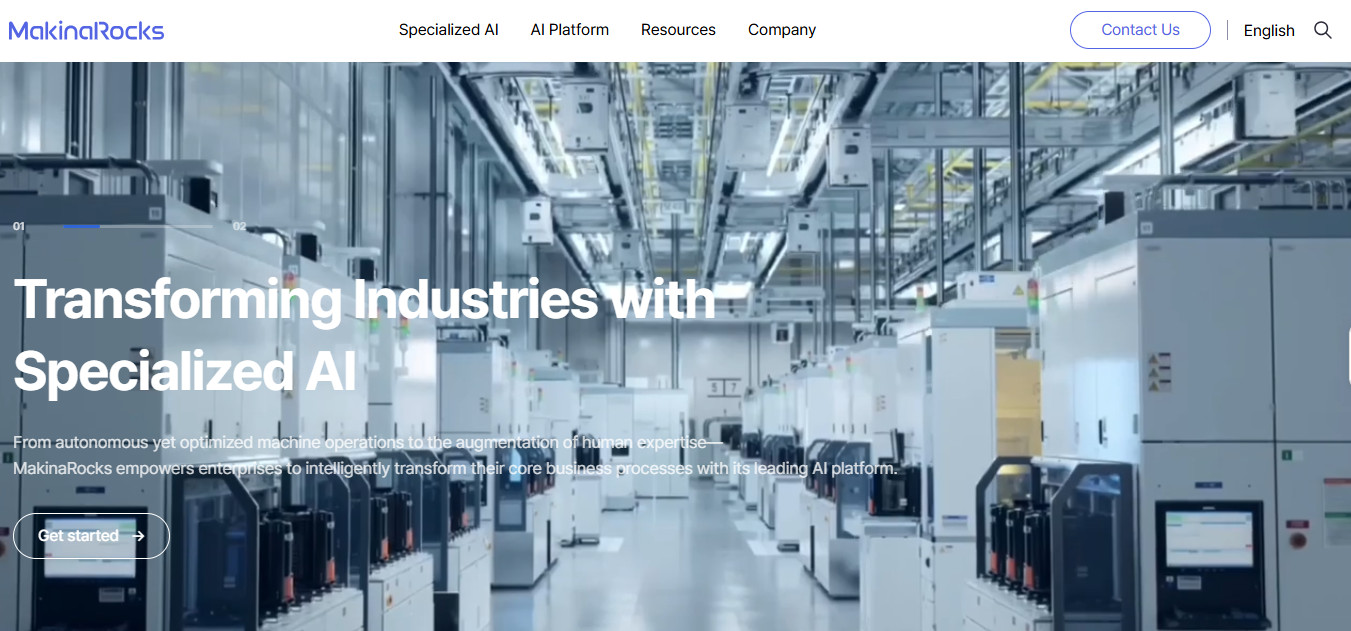
Selected as an ‘Emerging AI+X Top 100’ company continuously for six years, MakinaRocks is a powerhouse in advanced manufacturing. Its proprietary platform, MakinaRocks Runway, provides an end-to-end environment for the entire AI lifecycle. It excels in predictive maintenance, optimization, and vision AI. What makes it one of the best AI tools for manufacturing industry is its ability to integrate LLMs and agent technology to analyze complex design drawings. This reduces drawing review and change management time by 2x to 3x compared to traditional processes.
3. Nexus: Autonomous Process Optimization
Nexus is leading the charge in agentic AI for process control. Unlike basic monitoring tools, Nexus integrates directly with industrial controllers to perform continuous tuning of production systems. It actively adjusts key variables such as throughput and quality metrics autonomously. For manufacturers looking to move from predictive to prescriptive action, Nexus represents one of the best AI tools for the manufacturing industry for closed-loop optimization.
4. Phaidra: Energy-Efficient Process Control
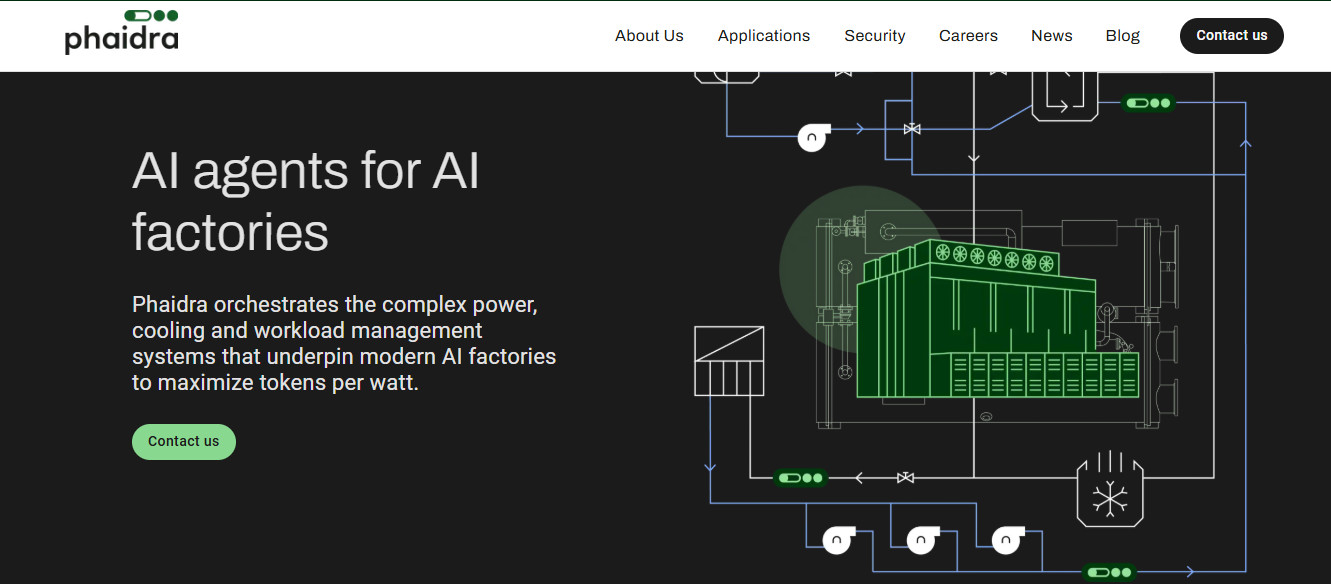
Energy costs are a massive burden on heavy industry. Phaidra utilizes reinforcement learning to minimize energy consumption while maintaining stable process outcomes. Instead of relying on static rules, Phaidra’s AI agents learn the physics of the plant and autonomously make setpoint adjustments. As sustainability becomes as critical as cost, Phaidra ranks among the best AI tools for manufacturing industry for reducing carbon footprint without sacrificing throughput.
5. Praxie: AI-Based Production Scheduling
Scheduling is a nightmare of constraints, but Praxie solves this by focusing specifically on real-time rescheduling. It monitors live factory signals and adjusts production schedules instantly when equipment goes down or materials run short. It doesn’t try to control the machinery directly, making it a safe, low-risk entry point for manufacturers. This specialization makes it one of the best AI tools for manufacturing industry for improving uptime and on-time delivery.
6. Instrumental: Automated QA Agent
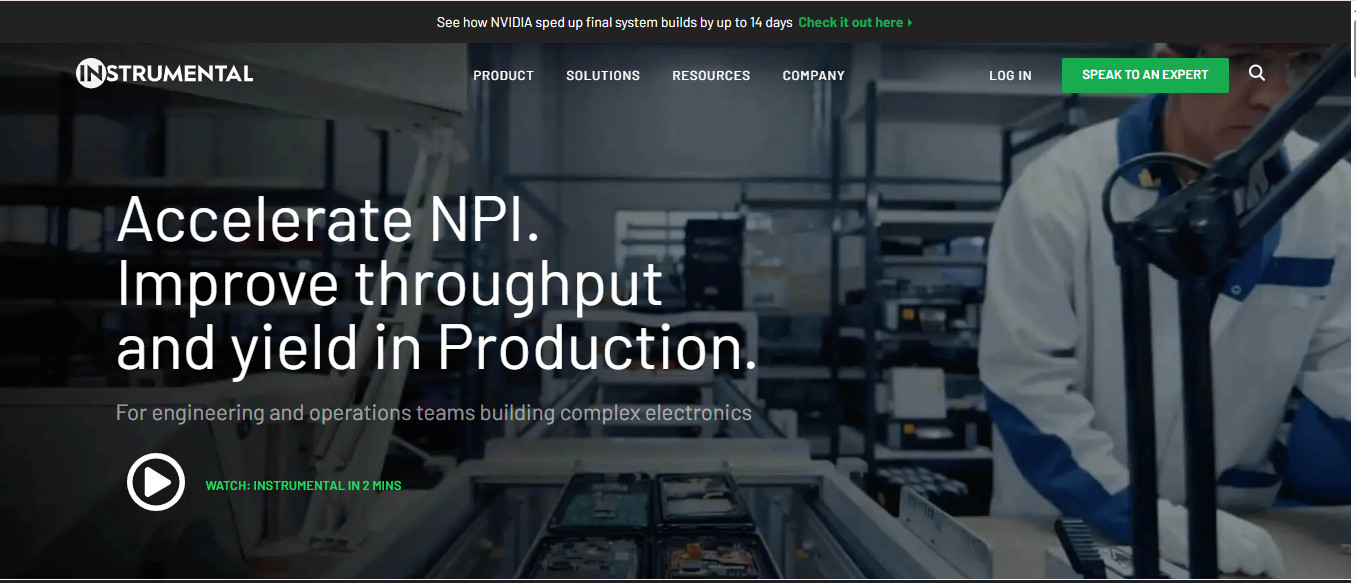
Quality control is being revolutionized by vision AI. Instrumental does more than just spot defects; it learns from production data to catch new failure modes that engineers didn’t anticipate. It provides analytics and feedback directly to the production line, closing the loop between inspection and correction. For electronics and high-precision assembly, this is certainly one of the best AI tools for manufacturing industry.
7. Dataiku: Workforce & Knowledge Transfer
Dataiku enables manufacturers to deploy Generative AI agents that ingest maintenance logs, shift reports, and technical manuals to create a queryable “synthetic expert.” Michelin utilizes Dataiku to collaborate across 70 factories. It is widely considered one of the best AI tools for manufacturing industry, not for moving metal, but for preserving institutional memory and upskilling the workforce.
8. Arkestro: Procurement Intelligence
Supply chains in 2026 are fragile. Arkestro applies predictive analytics to improve sourcing performance in real time. It moves beyond simple e-procurement by autonomously suggesting optimal pricing and sourcing strategies based on market dynamics. If you are looking for the best AI tools for manufacturing industry to combat inflation and supplier risk, Arkestro’s agentic approach to procurement is a game-changer.
9. Cognex Vision AI: Machine Vision Quality Control

Cognex has long been the leader in machine vision, but their latest deep learning-based tools are taking autonomy to the next level. These agents can detect complex, subtle visual defects on high-speed production lines that rule-based systems would miss. For high-volume manufacturing, Cognex remains one of the best AI tools for manufacturing industry for ensuring zero-defect shipments.
10. Vention MachineLogic: Intelligent tool for machinery management
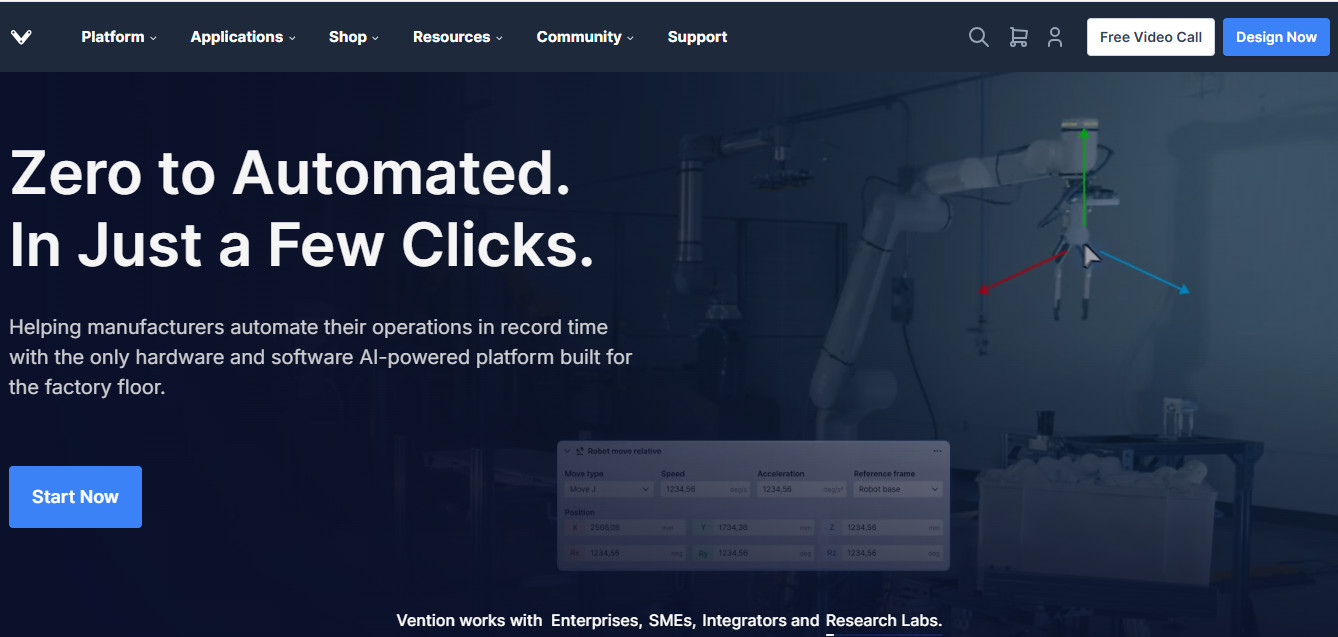
Returning to the list due to its dual impact, Vention MachineLogic specialized Vision AI solution detects atypical defects in complex processes like welding. It standardizes inspection criteria that were previously reliant on subjective human judgment. By utilizing demo kits for rapid PoC implementation, it allows manufacturers to deploy AI inspection software without expensive hardware upgrades, solidifying its status as one of the best AI tools for manufacturing industry.
Detailed comparison for choosing the best fit
| Tool / Platform | Core Focus Area | Key Capability | Best Suited For | Level of Autonomy |
| Siemens & NVIDIA (Industrial AI Operating System) | Digital Twin & Industrial AI | Real-time simulation and lifecycle intelligence | Large-scale smart factories | High |
| MakinaRocks (Runway Platform) | End-to-End AI Lifecycle | Predictive maintenance, LLM-based design analysis | Advanced manufacturing environments | Medium–High |
| Nexus (Autonomous Process Optimization) | Process Control | Closed-loop system tuning and autonomous optimization | Continuous and high-volume production | Very High |
| Phaidra (Energy-Efficient Process Control) | Energy Optimization | Reinforcement learning for energy reduction | Energy-intensive industries | High |
| Praxie (AI-Based Production Scheduling) | Production Planning | Real-time dynamic rescheduling | Plants with complex scheduling needs | Medium |
| Instrumental (Automated QA Agent) | Quality Assurance | Vision AI defect detection with feedback loop | Electronics and precision manufacturing | High |
| Dataiku (Workforce & Knowledge Transfer) | Knowledge Management | Generative AI for operational intelligence | Multi-plant global manufacturers | Medium |
| Arkestro (Procurement Intelligence) | Supply Chain & Sourcing | Predictive procurement optimization | Procurement-driven organizations | Medium–High |
| Cognex Vision AI (Machine Vision Quality Control) | Machine Vision | Deep learning visual inspection at scale | High-speed production lines | High |
| Vention MachineLogic (Higher Inteligence) | Specialized Inspection | AI-powered welding and defect detection | Automotive and heavy fabrication | Medium–High |
Conclusion
Looking at this list, a clear trend emerges. The best AI tools for manufacturing industry in 2026 are not chatbots. These are agentic systems that go beyond simple recommendations—they ensure the overall processing of less complicated and repetitive tasks while successfully predicting machine failure and adjusting parameters to prevent it. Whether it is Siemens building the operating system or MakinaRocks fine-tuning welding robots, the goal is the same: resilience, autonomy, and amplified human potential.
FAQ:
Difference between AI tools and AI agents?
AI tools assist humans; AI agents autonomously execute goal-driven industrial decisions independently.
How is AI addressing labor shortages?
It captures expert knowledge digitally, enabling junior workers to perform complex tasks efficiently.
Are these AI tools affordable for SMEs?
Yes, many platforms offer modular, scalable, low-code solutions, reducing upfront investment requirements.
What is a Digital Twin and why important?
A virtual factory replica enabling AI-driven simulations before real-world production implementation.
How secure are agentic AI tools?
They operate within secure infrastructures using defensive AI and restricted data environments.
Expected ROI from implementing these tools?
ROI includes higher throughput, reduced downtime, lower rework costs, and improved decision-making.
Will AI replace factory workers?
No, AI augments workers, shifting roles toward supervision and advanced technical coordination.