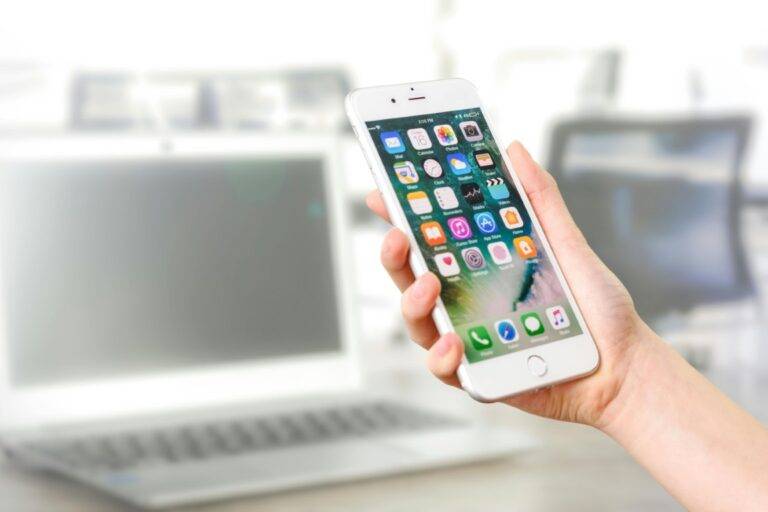
In early December 2025, ByteDance — the parent company of TikTok — and smartphone manufacturer ZTE unveiled what many are calling the world’s first fully “agentic” AI smartphone. The device, an engineering prototype named Nubia M153, is powered by ByteDance’s in-house large language model ecosystem Doubao, embedded directly at the operating-system level. The result: a phone that can operate like a human — launching apps, navigating interfaces, processing voice commands, making payments, booking services, and more — all autonomously.
This article explores what “agentic-AI phone” means, how ByteDance’s approach works, what the Nubia M153 offers, and the broader significance — as well as risks — of this new paradigm for smartphone design and use.

Image Credit: ixbt
What Is an “Agentic AI Phone”?
From Voice Assistants to Full-Stack Agents
Traditionally, smartphones with AI have offered voice assistants (e.g., telling the phone what to do, receiving responses, sometimes launching an app). These are reactive: you say a command, the phone responds or performs a simple task.
An agentic AI phone, by contrast, embeds an intelligent agent at the OS-level that can reason, plan, interact with the user interface, and perform multi-step tasks across apps — acting more like a digital assistant with autonomy. Instead of limiting interactions to simple commands (e.g., “set alarm,” “open app”), the AI can carry out complex workflows: browse apps, compare prices, make reservations, edit photos, complete payments — operating the phone as a human would.
ByteDance + ZTE: A Software-First Strategy
ByteDance’s strategy diverges from building its own hardware. Instead, it partners with OEMs (starting with ZTE) and integrates Doubao at the system level, turning smartphones into “AI-driven agents” without them needing to manufacture the phones themselves.
Thus, ByteDance positions itself not as a device maker, but as a software-platform provider — offering AI agents that phone makers can license and deploy. This approach could significantly accelerate the proliferation of agentic phones if adopted broadly.
The Nubia M153: The Prototype Agentic Phone
Hardware & Build
- Device: Nubia M153 (engineering prototype)
- Price: 3,499 Yuan (≈ US$494)
- Specs: 6.78-inch LTPO OLED display, triple 50 MP rear cameras, Qualcomm Snapdragon 8 Elite Gen 5 chipset, 16 GB RAM, 512 GB storage — flagship-level hardware.
- Purpose: Marketed as an “engineering prototype” — not a polished flagship meant for mass release.
Software & Capabilities
The Nubia M153 runs a customized Android variant with Doubao deeply integrated into the OS. This enables:
- Full-stack AI interaction: The AI can “see” the screen, open apps, navigate UI, type, click, and conduct multi-step tasks. For example: booking a restaurant, comparing prices across shopping apps, purchasing items, making payments — all via voice commands.
- Cross-app orchestration: The agent can decide which app to open depending on task, fill in forms, and complete complex workflows like e-commerce purchases or booking services.
- Photo and media editing: Tasks such as photo editing (e.g., removing a pedestrian from a picture) demonstrated — showing the AI can manipulate media directly.
- Local + Cloud hybrid processing: According to available reports, Doubao handles semantic reasoning in the cloud, while on-device components (e.g., a GUI-agent visual model dubbed “Nebula-GUI”) manage UI interactions to speed up input and preserve user privacy (especially for sensitive flows like payments).
- Multi-modal reasoning: The agent can interpret images (e.g., identify a location or object), understand context, and act accordingly — illustrating a blend of vision + language capability.
Market Response & Availability
- The prototype reportedly sold out immediately upon launch in China. While ByteDance and ZTE did not disclose the total units, the resale price surged ~43%, indicating high demand or speculative buying.
- ByteDance has clarified it does not plan to make its own phones; rather, it aims to partner with multiple manufacturers to license Doubao’s agentic system.
- The current release is described as “technical preview” — functionality might not match a mature, mass-market phone yet. Software updates are planned bi-weekly through March 2026.
Why This Matters — Implications of Agentic Phones
1. A Paradigm Shift from Smart Phones to “AI Phones”
If widely adopted, agentic AI phones could redefine how users interact with smartphones: instead of manually opening apps, typing, and navigating — users could simply describe what they want, and the phone would handle the rest.
This dramatically lowers friction: tasks like booking tickets, price comparison, online shopping, photo editing — that normally require several manual steps — could become as simple as a voice request.
2. Democratizing Advanced AI on Mobile
With Doubao already having millions of users in China, embedding it at the OS level means many consumers, not just tech-savvy early adopters, could access agentic AI — bringing “AI power” to the mass market.
Moreover, the software-first approach (rather than hardware manufacturing) makes it easier for multiple phone manufacturers to adopt, potentially accelerating global rollout.
3. New Use Cases for AI Agents Beyond Chat or Search
Agentic phones open up possibilities for real-world use-cases where AI does repetitive or multi-step tasks:
- E-commerce: Cross-app price comparisons, automated bargain hunting, auto-checkout workflows
- Travel & Services: Booking taxis, hotels, tickets; scheduling appointments; even negotiating with other bots on your behalf — e.g. as shown in Chinese lifestyle apps.
- Content Creation & Editing: Photo edits, media manipulation, video/photo editing workflows via voice or minimal input — useful for creators, marketers, or casual users.
- Accessibility & UX Enhancement: For users less comfortable with navigating complex UIs (elderly, differently-abled), agentic AI could simplify use by turning tasks into natural-language interactions.
- Automation of Repetitive Tasks: From managing bills, purchases, scheduling — tasks that currently require multiple steps — AI can automate and simplify.
4. Competitive Pressure on Smartphone Industry & OS Ecosystem
ByteDance-ZTE’s agentic phone challenges traditional smartphone makers (like Huawei, Xiaomi, Samsung, Apple) to evolve — to embed deep AI agents rather than limit AI to voice assistants or limited features. The “AI OS” model could redefine what value a smartphone offers.
This may spur a new wave of AI-first smartphones globally, leading to more widespread integration of multimodal, agentic AI systems.
Challenges, Concerns & What Needs to Improve
Prototype, Not a Finished Product
The Nubia M153 is explicitly labeled as an “engineering prototype” — not a fully polished product. ByteDance and ZTE admit that the software cannot guarantee functional completeness and may lag behind flagship devices.
Users opting for early access must tolerate bugs, incomplete features, and potential instability.
Privacy, Security & Trust Issues
Embedding an AI agent with OS-level control raises serious privacy and security questions:
- The AI needs access to apps, payment flows, personal data — misuse or vulnerabilities could lead to data leaks or unauthorized access.
- On-device + cloud hybrid architecture means some processing occurs off-device; how is personal data handled, stored, or shared?
- For third-party developers or apps, integration or denial of agentic control might create compatibility or security dilemmas.
Regulatory & Ethical Considerations
In many markets, automating payments, bookings, or third-party app usage — possibly including financial transactions — may require compliance, verification, and security standards. Regulators may scrutinize agentic phones more strictly than standard devices.
Balanced Human Oversight vs AI Autonomy
Fully agentic phones blur the line between user control and AI autonomy. Users may risk losing control or awareness of what the AI is doing. Erroneous commands or poorly understood workflows could lead to mistakes — especially in critical tasks (e.g., payments, personal data).
Hardware & Software Fragmentation Risk
If every manufacturer or region uses a different agentic system, fragmentation may occur — reducing interoperability, complicating support, and making it harder for developers to optimize for agentic features across devices.
What This Means for Users, Developers & the Industry
For Users
- If you value convenience, automation, and hands-free phone usage, agentic phones could be a leap forward — tasks you currently do in multiple steps could be done via voice or natural language prompts.
- Early adopters must be ready for rough edges: prototypes, bugs, stability issues, and possible privacy trade-offs.
- For users concerned about data privacy, due diligence is essential: check what data is shared, whether local vs cloud processing, and how payments or sensitive workflows are handled.
Developers & App Makers
- Agentic OS-level integration could open new APIs and workflows — but also demand rethinking how apps handle AI-driven interactions, permissions, security, UI design.
- Developers may need to adapt apps to be “agent-friendly” (i.e. handle being driven by AI agents, UI automation, permission gating).
- There’s opportunity to build niche services for agent-driven phones — e.g. AI-powered automation tools, AI-native payment flows, dynamic UI adapters, etc.
Smartphone OEMs & Industry Stakeholders
- OEMs may face pressure to adopt AI-agent integrations to stay competitive — especially in markets where agentic phones gain traction.
- Strategic collaborations between AI-software companies (like ByteDance) and hardware manufacturers may increase, decoupling hardware manufacturing from AI platform leadership.
- Privacy, security, and regulatory compliance will become critical differentiators — companies that handle those well may gain user trust; those that don’t may face backlash.
Global Significance: Is This the Future of Smartphones Everywhere?
ByteDance’s agentic-AI phone may mark the beginning of a global shift — from “smartphones + voice assistants” to “AI-native smartphones with agents that act on our behalf.” If other manufacturers adopt similar strategies, we could see:
- A new category of devices: Agentic AI Phones, competing with traditional flagships
- A shift in mobile OS design: deeper AI integration at OS level, not just within apps
- More automation in everyday tasks — reducing friction in daily workflows, especially for users who prefer voice or simplified UI interaction
- Increased demand for privacy-aware, security-hardened devices and transparent AI data policies
However, widespread adoption depends on solving the challenges: robustness, privacy, regulation, and user trust.
Conclusion: Agentic Phones — The Next Wave, If Managed Right
ByteDance’s agentic-AI phone prototype signals a major shift in smartphone evolution: from passive devices requiring manual interaction, to active agents capable of handling complex workflows autonomously. If adopted widely, this could redefine what we expect from our mobile devices — transforming them from tools into intelligent assistants that manage everyday digital tasks for us.
However, the transition comes with challenges: security, privacy, regulatory compliance, and reliability. As with all powerful technologies, the key will be balance: enabling innovation and convenience, while ensuring transparency, user control, and safety.
For users, developers, and industry stakeholders alike — this could be the start of a new era. The choices made now in design, regulation, and adoption will shape how agentic AI phones integrate into our daily lives. If done right, the reward could be a truly smarter, more intuitive, and more helpful mobile experience.
FAQs
What exactly is the “ByteDance agentic-AI phone”?
It refers to the prototype phone (Nubia M153) by ZTE running ByteDance’s Doubao AI agent integrated at the OS level — enabling the AI to navigate apps, perform multi-step tasks, make payments, edit media, and more, with minimal user input.
Is the phone available for purchase globally?
No — currently the Nubia M153 is an engineering prototype, launched in limited numbers in China. ByteDance and ZTE say they are in discussion with multiple manufacturers globally, but they have not announced mass-market availability yet.
How much does the prototype cost?
The prototype is priced at 3,499 yuan (approx. US$494). Resale prices in the secondary market reportedly surged up to ~4,999 yuan (≈ US$715), reflecting hype and limited supply.
What can the AI do that existing assistants cannot?
Unlike typical voice assistants that can open apps or perform simple commands, this AI can see the user interface, navigate apps, fill forms, make payments, book services, conduct cross-app workflows, perform media editing — essentially acting like a human user, not just a voice-command interface.
Will ByteDance manufacture smartphones regularly now?
No. ByteDance has clarified that it does not plan to build its own phones. Its strategy is to license its AI agent platform to other phone manufacturers, who supply the hardware.
What are the biggest risks of an agentic-AI phone?
Main concerns include privacy and security (AI having deep app/OS access), stability (prototypes may have bugs), regulatory compliance (especially for payments, data), user consent and trust, and potential misuse if AI agents act autonomously without oversight.