
The world of quantum computing has recently crossed a turning point that may shape the future of science and technology. Google Quantum AI has announced an incredible achievement, the creation of its most powerful quantum processor yet, called the Willow quantum chip. Built after years of research, this chip has shown the first verifiable quantum advantage in history. It proves that quantum computers can now solve certain problems faster and more accurately than even the suitable classical supercomputers.
This is not just another upgrade; it’s a bold step toward real, everyday quantum computing. The results from Willow could change how scientists study molecular structures, chemical reactions, and even the complex physics of black holes. Let’s explore how this achievement came to life and what it truly means.

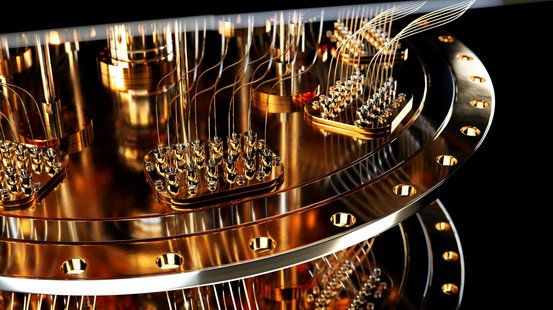
Image Source: interestingengineering
The Creation of the Willow Quantum Chip
The Willow chip is the result of more than ten years of development and innovation by Google’s team. First revealed in December 2024, it uses 105 superconducting qubits to perform calculations that no traditional computer could complete in a reasonable time.
Qubits, the quantum version of classical bits, are the core of any quantum machine. They can exist in multiple states at once, a property known as superposition. But controlling and reading them without errors is extremely hard. That’s why this new processor matters so much.
Unlike its predecessors, Willow isn’t only about raw computational speed. It’s about control, precision, and stability. The biggest challenge in quantum computing has always been error correction, maintaining the delicate quantum states long enough for complex computations. The Willow chip finally shows a way to manage errors efficiently, allowing reliable results. This breakthrough moves the technology closer to useful, real-world applications.
The Quantum Echoes Discovery: 13,000 Times Faster
At the centre of this milestone is a special kind of simulation called the Quantum Echoes algorithm. Google scientists used it to test how quantum information behaves inside their system. They published the results in Nature, showing that Willow completed a simulation 13,000 times faster than the world’s strongest classical supercomputer.
So how does this work? The Quantum Echoes method acts like a form of quantum sonar. Scientists send specific signals into the chip’s grid of qubits, gently disturb just one of them, and then let the system evolve. Later, they reverse the process to detect an “echo” — the system’s collective quantum response.
These echoes reveal how information spreads across the chip’s qubits and how it gets scrambled, or mixed up, over time. The results are measured with extreme precision, offering insights that even supercomputers cannot replicate.
This concept builds upon an idea in quantum mechanics known as out-of-time-order correlators (OTOCs). It helps physicists study how quantum information gets dispersed or lost in complex systems. What makes Willow special is that it performs this test in a verifiable, scalable, and meaningful way — something never done before.
Unveiling the Hidden Patterns of Quantum Chaos
The idea of information scrambling is one of the most fascinating in modern physics. In classical terms, chaos refers to small differences in initial conditions suitable to very different results — famously called the “butterfly effect”.
In quantum systems, the story becomes even more interesting. When quantum information is disturbed, it spreads across the system in strange patterns governed by quantum laws, not classical randomness. Understanding how this happens gives scientists clues about its nature.
Google’s Quantum Echoes experiment lets researchers observe these patterns clearly, showing exactly how quantum chaos unfolds over time. Earlier attempts, such as those using the Sycamore chip back in 2021, managed similar but less complex experiments. Those results were important, but they could still be imitated using powerful classical simulation. With Willow, the scale and precision are finally beyond what even the suitable classical computers can handle.
Engineering the Willow Chip
Willow’s strength comes from a combination of clever design and refined technology. Its processor layout includes 105 superconducting transmon qubits, carefully arranged in a two-dimensional grid. These qubits operate at temperatures near absolute zero, allowing quantum effects to appear clearly.
Each operation that the chip performs—whether involving one qubit or an entire network— must be extremely accurate. Willow achieves the highest recorded levels of precision ever seen:
- Single-qubit operations: 99.97% fidelity
- Two-qubit entangling gates: 99.88% fidelity
- Readout operations: 99.5% fidelity
Execution speeds range from a few dozen to a few hundred nanoseconds. These improvements may seem minor, but they completely change what’s possible. For comparison, Google’s 2019 Sycamore processor produced correct results less than 1% of the time. With Willow, that number has flipped — now 99.9% of data is correct, an enormous leap in reliability.
Google researchers ran tests confirming that simulating Willow’s Quantum Echo process on a classical supercomputer would take nearly three years of nonstop calculation. Willow did the same computation in about two hours. This difference demonstrates real, measurable quantum advantage.
Quantum Error Correction: Cracking the Hardest Problem
One of the most valuable aspects of Willow is its achievement in quantum error correction. Since the 1990s, scientists have tried to prove that adding more qubits could actually reduce overall errors instead of amplifying them.
Until now, every large quantum system suffered from the opposite problem — as you scale up, the number of errors increases. Willow breaks that rule. Its design shows below-threshold error correction, meaning that when more qubits join the system, the overall error rate declines exponentially instead of growing.
This signals a genuine breakthrough. It confirms that large, fault-tolerant quantum machines built from superconducting circuits are truly possible. The design builds directly on decades of pioneering research that earned scientists like John Martinis, Michel Devoret, and John Clarke the 2025 Nobel Prize in Physics.
From Molecules to Black Holes: Real Uses Emerging
While the Willow demonstration is remarkable, what really excites researchers are the applications that follow. In partnership with the University of California, Berkeley, Google’s team already used Willow for early experiments in molecular analysis.
They simulated small organic molecules containing 15 and 28 atoms to determine how hydrogen atoms were spaced. The results matched those obtained from traditional Nuclear Magnetic Resonance (NMR) but provided additional microscopic detail beyond what NMR normally detects.
This new technique, nicknamed a “quantum molecular ruler,” could spark breakthroughs in fields such as drug design and materials science. Scientists can now visualize how drugs bond to protein sites, or how new materials behave at the atomic level, potentially speeding up discovery by years.
Beyond chemistry, the same Quantum Echoes process could answer some of physics’ deepest questions — particularly around black hole information paradoxes. Does the information contained in matter vanish forever when it falls into a black hole? The mathematics describing this process closely resembles quantum scrambling. Studying these echoes could someday offer clues to one of science’s most mysterious puzzles.
The Multiverse Conversation
When Google presented Willow’s results, comments from Hartmut Neven, head of Google Quantum AI, stirred widespread discussion. He suggested the chip performs computations that might imply processes happening across “many parallel universes,” nodding to the many-worlds interpretation of quantum mechanics.
This statement drew both curiosity and criticism. Many scientists noted that while multiverse ideas are fascinating, Willow’s results do not directly prove them. The chip doesn’t literally confirm the existence of multiple universes — it simply operates according to quantum laws, which can be interpreted that way philosophically.
Despite the debate, even sceptics agree that Google’s experimental achievements are solid, testable, and reproducible, which is what matters most in science.
Verified Quantum Advantage: Skepticism Meets Evidence
In 2019, Google’s earlier Sycamore chip claimed “quantum supremacy” by solving random circuit problems faster than classical computers. However, critics argued that the problem chosen was artificial, with no real-world importance. Over time, better classical algorithms even narrowed that gap.
This time, Willow avoids those pitfalls. The Quantum Echoes task is meaningful — it probes how quantum systems spread and store information, which has both theoretical and practical value.
To ensure scientific robustness, Google’s team even performed “red-teaming” exercises. That means they challenged their own work, trying to find any classical methods that might match Willow’s speed and impressively none of them succeeded. Peer reviewers for Nature agreed the work was “impressive” and credible, though they warned that advances in classical supercomputing could still evolve.
For now, experts generally accept that Willow demonstrates true, verifiable quantum advantage, something no other processor has yet shown on such a large scale.
Challenges That Still Remain
Even with Willow’s success, the road to fully practical quantum computing remains long. While its error rate of 0.14% per cycle is impressive, true large-scale quantum machines require much lower rates — closer to 0.0001%.
Moreover, Willow’s demonstrations focus mostly on storing and preserving quantum information rather than performing complex, multi-step logical operations. To solve industrial-scale problems, millions of qubits will be needed — far more than Willow’s 105. Scaling up will require new cooling systems, better interconnects, and innovations in chip design.
Researchers describe this stage as part of the NISQ (Noisy Intermediate-Scale Quantum) era of systems powerful enough for significant experiments, but not yet ready for mass commercial use. Google’s roadmap, however, is optimistic. Based on past progress (from Bristlecone in 2018 to Sycamore in 2019 and now Willow in 2024), the company believes functional quantum applications could appear within the next five years.
Impact on the Industry
The news about Willow rippled across the scientific and business worlds. Alphabet’s stock jumped over 5% shortly after the announcement, signalling investor confidence in Google’s lead over competitors like IBM and Microsoft.
Currently, Willow is not available commercially; it operates as a research platform. Its exact cost of development remains undisclosed, but it’s estimated to be among the most expensive experimental computing platforms ever built.
Meanwhile, speculation about whether Willow could crack encryption systems is unfounded. With only 105 qubits, it lacks the computational scale to break modern encryption keys. Experts agree that while companies should prepare for future post-quantum cryptography, there is no immediate danger.
What Willow does achieve, however, is proof of direction. It shows investors, governments, and researchers worldwide that large-scale quantum machines are no longer theoretical dreams but engineering projects moving rapidly toward reality.
A Turning Point in Quantum History
Google’s Willow chip marks a new phase in how humanity harnesses quantum mechanics. The experiment proves that quantum advantage can be verified, reproduced, and applied to meaningful problems.
The field has matured, moving away from attention-grabbing “supremacy” claims toward measurable progress that helps solve scientific challenges. Willow signals that quantum computing’s purpose is becoming clear: not to replace classical machines, but to complement them where quantum laws offer natural advantage.
The possibilities now range from faster drug design to better climate modelling, safer materials, and deeper understanding of cosmic systems. Each improvement in qubit stability or error correction moves us a step closer to practical, fault-tolerant quantum machines.
Like the echoes that bounce inside its quantum circuits, the impact of Google’s Quantum Echoes experiment will continue resonating throughout science and technology. For decades, physicists dreamed of this moment, when quantum mechanics would evolve beyond theory into usable technology. That moment has arrived, and its reverberations are only beginning.