
AI image editing has reached a thrilling new milestone with Nano Banana AI—also known as Gemini 2.5 Flash Image. Since its cautious and viral emergence, this powerful AI model has captivated creators and tech watchers alike. Here’s an in-depth, breakdown of what Nano Banana AI is, why it matters, and how you can harness its potential in your workflow.
What Is Nano Banana AI? The Story of a Mysterious Discovery
Nano Banana AI – The advanced image generation and editing model developed by Google is internally referred to as Gemini 2.5 Flash Image. Officially launched on August 26, 2025, it is integrated into Gemini’s app, Google AI Studio, and Vertex AI. The tool allows users to generate, modify, and merge images using natural language—while preserving character consistency across edits.
Unlike products from Google AI or other major labs, Nano Banana AI did not debut with a press release or a keynote presentation. Instead, it emerged silently on LM Arena’s Image Edit Arena, a platform designed for blind “battle mode” testing where various AI models compete anonymously. Users submit prompts and evaluate the results without knowing which model generated them, ensuring unbiased comparisons.
To the astonishment of the community, an unassuming anonymous model—codenamed Nano Banana—began consistently delivering remarkably precise and coherent results. Its defining moment was executing complex, multi-step commands in a single pass. For instance, a prompt like “Transform the top character into Master Chief from Halo and the bottom character into 2B from Nier: Automata” was handled with flawless accuracy, leaving other models in the dust.
This anonymous yet superior performance immediately ignited speculation within the AI community. The most prevalent theory is that Nano Banana AI is an unannounced internal project from Google, potentially a successor to its Imagen model or a specialized variant of the Gemini multimodal AI. The resources required to develop a model of this calibre point toward a major tech player, though Google has yet to officially confirm any connection. The names Gemini Nano Banana and Google Nano Banana have since become shorthand for this enigmatic technology within forum discussions.
Why the Banana Buzz? The Origins and Confirmation
- The model first surfaced anonymously via LMArena, where users compared AI image engines in blind “battle mode” tests. Nano Banana stunned users with its precision, sparking speculation about its origins.
- That speculation soon turned to reality when Google CEO Sundar Pichai confirmed the tool—tweeting three bananas—as its official unveiling. The model was formally introduced as Gemini 2.5 Flash Image.
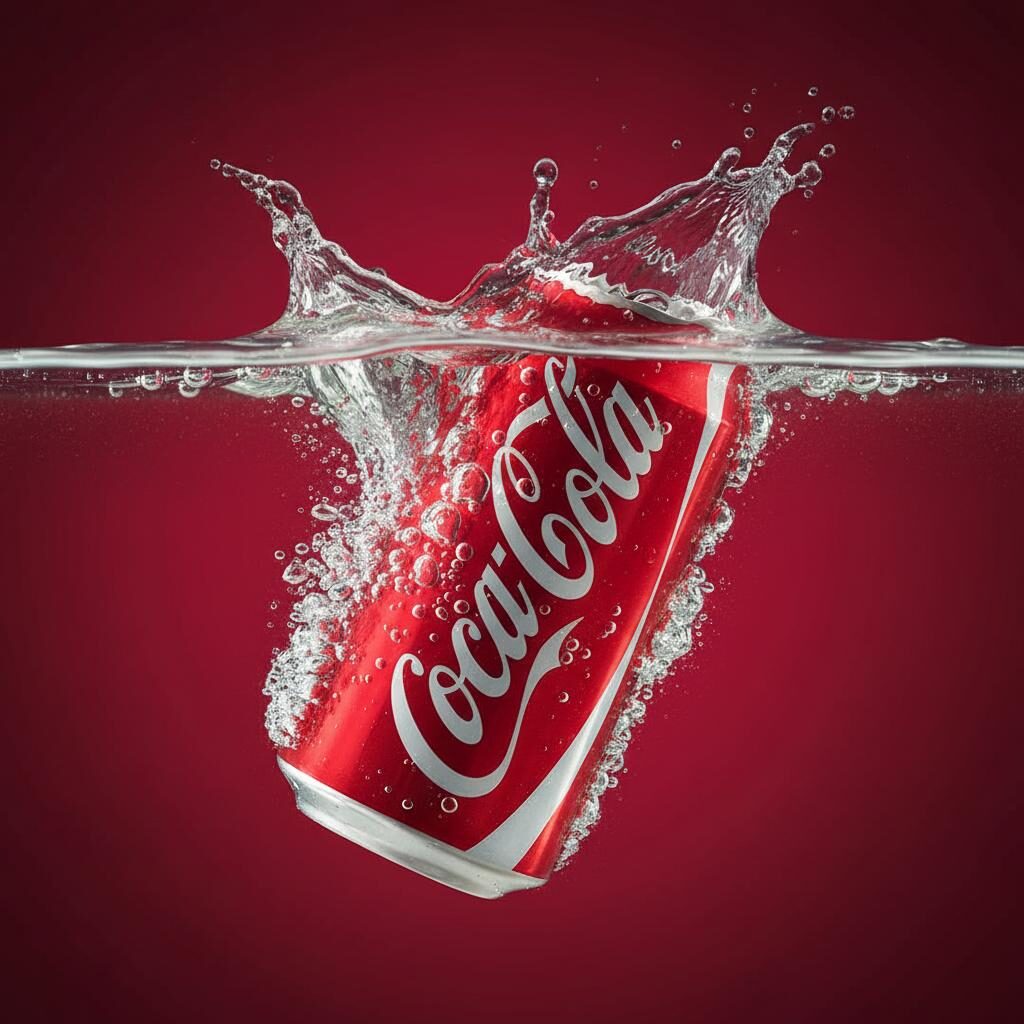
Just Tried Google’s Nano Banana AI and It’s Insane
This model edits pictures really well.
Prompt: A vibrant, dynamic product shot of a red Coca-Cola can underwater. The aluminum can is tilted diagonally as it splashes into clear water, creating bubbles, ripples, and a wave motion at the surface. The Coca-Cola logo in bold white script is fully visible on the red background of the can. Bright studio lighting highlights the metallic reflections of the can, as well as the crystal clarity of the bubbles and splashes. The background is a smooth, deep red gradient that enhances the iconic brand colors. The overall style is hyper-realistic, high-resolution commercial photography with sharp focus, dramatic lighting, and emphasis on motion, freshness, and energy.
7 Core Features That Set Nano Banana Apart
1. Preserved Character Consistency
Nano Banana stands out by consistently preserving the clarity of characters, facial features, and objects through repeated edits—an area where many AI image platforms still struggle.
2. Multi-Step Natural Language Editing
Users can issue complex instructions in text—like changing outfits, placing characters in new scenes, or combining images—all executed seamlessly in one go.
3. Advanced Image Fusion
Merge multiple inputs into one cohesive image while retaining context, lighting, and visual alignment.
4. World Knowledge Integration
Built within Gemini’s LLM, the model understands real-world context, enabling edits that incorporate accurate object behaviours and semantics.
5. Ultra-Fast Execution
Lightning-fast edits in under a second make Nano Banana ideal for interactive creative workflows.
6. Experiment-Friendly Interface
Through Google AI Studio, users can prototype and customize image-editing apps using “vibe code,” complete with templates for blur, background swap, or multi-image fusion tasks.
7. Safety Markers
Every output carries both visible and invisible (SynthID) watermarks to signal AI generation—though concerns about deepfake misuse persist.
Strengths Compared to Other AI Editors
Here’s a quick snapshot of how Nano Banana measures up against competitors:
| Feature | Nano Banana AI | Competitors (e.g., Midjourney, DALL·E) |
| Character Fidelity | Exemplary—identical across edits | Often varies or deforms across outputs |
| Multi-Step Prompt Plug | One-shot natural language edits | Usually require manual steps or re-prompts |
| Scene and Context Fusion | Seamless image merging | Prone to artefacts and lighting issues |
| Speed | Near-instant in the Gemini App or AI Studio | Slower, especially for high-res outputs |
| Accessibility | Built into Gemini, AI Studio, and Vertex API | Separate platforms with inconsistent access |
How to Use Nano Banana AI
Via the Gemini App:
- Launch Gemini (web or mobile).
- Select Gemini 2.5 Flash Image (a.k.a. Nano Banana).
- Upload an image or start from scratch.
- Apply natural-language instructions (e.g. “Change the background to Paris nightscape while preserving her appearance”).
- Get an edited result instantly.
Via Google AI Studio:
- Open the “build mode”.
- Use or remix one of Google’s Nano Banana templates.
- Create an app UI with upload, prompt input, and transform buttons.
- Deploy within Studio or export to GitHub.
Free Trials on Third-Party Platforms:
- Flux AI and Bylo AI host free interfaces to test Nano Banana’s capabilities via browser—no signup required.
Pricing and Plans: How Much Does Nano Banana AI Cost? (2025)
While testing is free, sustained use operates on a credit system. Generating a high-resolution image typically costs 1 credit, though advanced models like Context Max cost more. Flux AI offers two primary purchase models.
Subscriptions (Ideal for Regular Users)
| Plan | MonthlyPrice | AnnualCredits | Ideal For |
| Basic | $7.99 | 1,200 | Individuals and occasional users |
| Pro | $23.99 | 6,000 | Content creators and small teams |
| Max | $63.99 | 19,200 | Agencies and professional teams |
- Note: Annual subscription payments apply a ~20% discount.
- Credit Packs (For Flexible, No-Subscription Access)
| Package | One-Time Price | Credits | Special Feature |
|---|---|---|---|
| Starter Pack | $30 | 200 | No expiration date |
| Growth Pack | $80 | 533 | Priority support |
| Professional Pack | $200 | 1,333 | Includes batch processing |
| Enterprise Pack | $800 | 5,333 | Dedicated support & API access |
- Concrete Use Cases and Applications
- The practical applications for Nano Banana AI extend far beyond creative experimentation.
Real-World Use Cases and Applications
| Industry | Use Case | Benefit of Nano Banana AI |
| Marketing & Social Media | Creating user-generated content (UGC) style ads | Rapid production of authentic-looking campaign imagery without costly photoshoots. |
| E-Commerce & Fashion | Virtual product photography & fittings | Generate professional model shots for any product and fit clothing to different body types digitally. |
| Content Creation | Designing digital influencers & avatars | Maintain a Suitablely consistent character identity across all content channels and posts. |
| Photography & Restoration | Photo retouching and restoration | Seamlessly remove scratches, cracks, or unwanted objects from both new and old photographs. |
| Game & Film Design | Concept art and 2D-to-3D conversion | Generate depth information and realistic perspectives from flat concept designs quickly. |
Current Limitations and Weaknesses
No AI is Suitable, and Nano Banana AI is no exception. It occasionally exhibits common generative AI challenges:
- Anatomical Errors: It can still struggle with the complex anatomy of hands and fingers.
- Text Rendering: Generating legible and correct text within an image remains a significant hurdle.
- Complex Reflections: Highly intricate lighting scenarios, like reflections on curved metallic surfaces, can sometimes lack logical consistency.
However, these weaknesses are minor compared to its overall groundbreaking performance and are expected to diminish with future iterations.
The Road Ahead: Nano Banana’s Potential Future
1. Custom API Integration
Imagine integrating Nano Banana into platforms like Canva, Shopify, or CRM tools—automating visual merchandising and dynamic content generation.
2. Deep Integration Across Google Services
Features are poised to be embedded deeper into Google Workspace apps, Android OS, Google Photos, and Slides, enabling intuitive visual editing with simple text prompts.
3. Evolution into Text-to-Video
Character fidelity and multi-step comprehension make Nano Banana a prime candidate for future video generation, enabling consistent animated characters in motion.
Conclusion
Google’s Nano Banana AI reimagines image editing—replacing complex tools with seamless, conversational commands for effortless creativity. Its ability to preserve characters, fuse scenes, and accomplish complex edits instantly sets a new industry benchmark.
Whether you’re a marketer, designer, developer, or creative professional, Nano Banana redefines the boundaries of possibility. Among Google’s AI suite, this gem promises to revolutionize visual storytelling and democratize powerful creative workflows.
FAQs
Q: What exactly is Nano Banana AI?
A: Nano Banana AI is a highly advanced AI model for generating and editing images based on natural language commands. It is renowned for its speed, photorealistic quality, and exceptional ability to maintain consistency across edits.
Q: Is Google really behind Nano Banana AI?
A: There is no official confirmation from Google. The speculation stems from the model’s immense power and resources required to build it, its sudden appearance on testing platforms, and the naming conventions that suggest a link to Google Gemini Nano.
Q: Is Nano Banana AI free to use?
A: Yes, you can test it for free via platforms like Flux AI, which offer a demo with initial credits. For higher volume and advanced use, paid plans and credit packs are available.
Q: How does it differ from Midjourney or DALL-E?
A: While Midjourney and DALL-E excel at text-to-image generation, Nano Banana AI’s key advantage is its superior precision in editing existing images and maintaining Suitable character consistency, which is crucial for storytelling and branding.