
In the rapidly evolving world of AI and cloud-native systems, observability has become mission-critical. In 2025, as AI models, agents, and dynamic distributed systems proliferate, it’s no longer sufficient to merely monitor system health; you need full-spectrum insight into how AI components behave, drift, interact, and fail. In this article, we dive into the top 10 suitable AI observability tools in 2025, compare observability vs monitoring, highlight open-source observability tools, and also mention the top 10 AI observability tools for free options.
What Is Software Observability (and AI Observability)?
At its core, observability is the ability to infer internal system states from external outputs (logs, metrics, traces). In software systems, we instrument telemetry so that we can answer not only “Is something wrong?” but also “Why is it wrong?” and, in AI systems, extend that to “Is this model misbehaving, drifting, hallucinating, or over consuming resources?”
For AI observability, additional dimensions emerge:
- Model performance metrics over time (accuracy, latency, throughput)
- Drift and distribution monitoring (data or concept drift)
- Prompt / trace-level observability (how inputs traverse layers)
- Anomaly detection & root cause analysis in AI pipelines
- Explainability and fairness/bias metrics
Therefore, a robust AI observability tool must combine the traditional pillars such as metrics, traces and logs, and layer on advanced models and interface-specific capabilities.
Top 10 AI Observability Tools for Free (or Open Source / Freemium)
If your budget is tight or you prefer open source, here are several strong options:
- Phoenix (part of Arize open-source) – free, self-hosted.
- SigNoz – open source, full observability stack.
- Datadog – AI/ML driven tool for assembling your observability stack.
- Dynatrace – combined with auto instrumentation
- New Relic – Full-stack LLM observability.
- AgentOps.ai – a tool to manage event-level insights.
- ServiceNow Cloud Observability– adapts changes and offers context-aware insight
- Elastic (open-source variant) – base stack components are free.
- Splunk Observability Cloud – og/SIEM strength in observability
- vFunction – detect technical debt, hidden dependencies, and structural anomalies.
These observability tools’ open-source options let you experiment, start small, and grow without huge licensing overhead.
Observability vs Monitoring: What’s the Difference?
| Aspect | Traditional Monitoring | Observability / AI Observability |
| Goal | Check health, alert on thresholds | Diagnose unknown issues, root cause, hypothesis-driven |
| Approach | Predefined dashboards and alerts | Exploratory queries, correlations, dynamic telemetry |
| Data Types | Basic metrics, limited logs | Correlated logs, metrics, traces, plus AI model telemetry |
| Scope | Known metrics & known failures | Unknown root causes, emergent behaviors |
| Use Cases | Uptime, alerts | Multilayer failure analysis, AI drift, anomaly detection |
Monitoring is basically a subset of observability, and observability as a whole concept empowers you to ask unique questions, especially when it comes to AI systems where new failure models emerge.
Why Observability Matters in 2025 (Especially for AI)
- Complexity explosion: Microservices, serverless, AI agents, and interdependencies make debugging blind without deep visibility.
- Unknown unknowns: AI systems fail in new ways (drift, hallucinations, prompt errors) that static alerting won’t catch.
- Faster incident resolution: reducing MTTD/ MTTR is essential when AI features are user-facing.
- Cost and efficiency: Observability lets you find inefficiencies, resource overuse, or redundant inference calls.
- Model trust & governance: Observability enables monitoring model fairness, bias, and reliability.
- Security overlap: Data Flow, anomalous patterns and observing model behaviour all help in threat detection within the software.
Gartner and CNCF AI observability integrations are considered top trends for 2025, as they emphasise automation, intelligence, and normalisation in the observability stacks.
How to Choose the Right AI Observability Tool
Before we list tools, here are selection criteria to evaluate:
Data coverage & integration
- Support logs, metrics, traces
- Seamless integration with AI frameworks such as TensorFlow, PyTorch and LangChain.
- The compatibility of OpenTelemetry to reduce vendor lock-in
Correlation and context
- Ability to link model telemetry to trace-level events
- Enrich telemetry with metadata (user, session, environment)
Query & visualization
- Ad hoc query capability, high-cardinality support
- Dashboards, service maps, trace graphs
AI/ML capabilities
- Anomaly detection, root cause analysis, drift detection
- Explainability, fairness, alerts based on model behaviors
Ease of adoption & usability
- Agent-based instrumentation vs manual setup
- Good UX, documentation, community
Cost structure & scalability
- Transparent pricing (data volume, users, nodes)
- Open-source / free-tier options to begin
Future-readiness
- Support for architectural or agent observability
- Extensible for upcoming AI patterns (multi-agent, hybrid models)
Let’s now move on to the top 10 suitable AI observability tools in 2025, covering both commercial and open-source (free / freemium) options.
Top 10 suitable AI Observability Tools in 2025
Below is our curated list of AI observability tools you should evaluate. (The ordering is not strictly ranking; choose what fits your stack.)
1. Arize/Phoenix (Open Source variant)
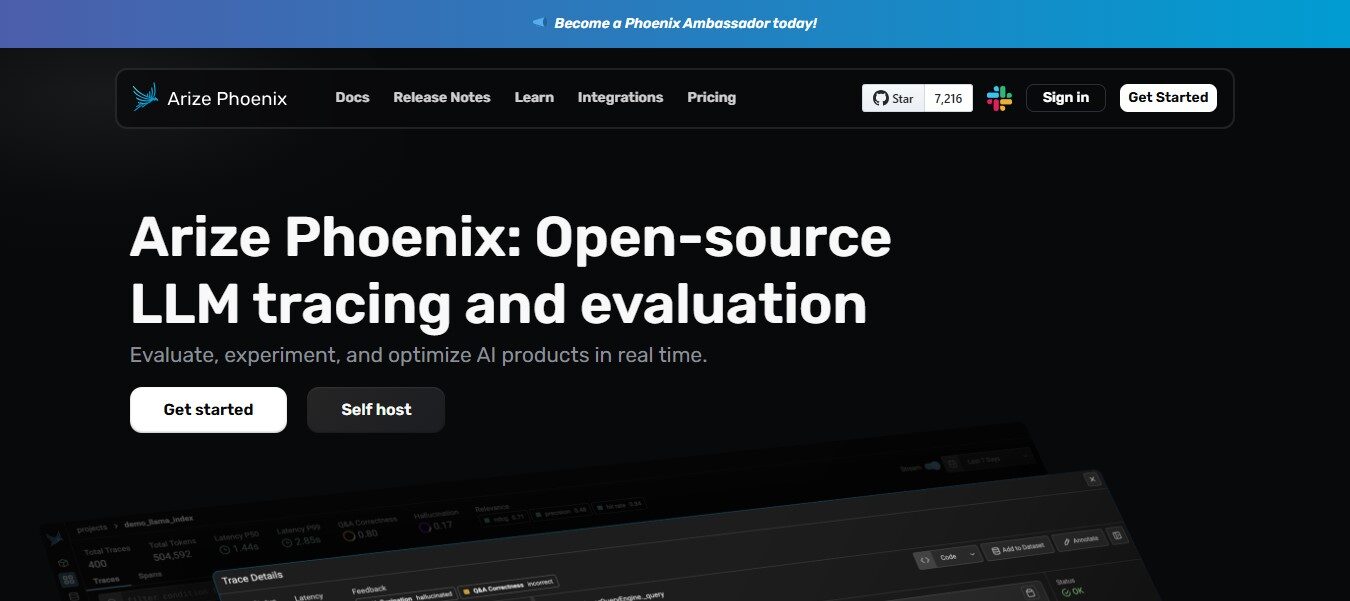
Arize is a suitable AI observability platform; its open-source part Phoenix is fully self-hostable and vendor-agnostic. Phoenix supports ingestion of model logs, drift detection, and evaluation and integrates with OpenTelemetry.
- Why it stands out: Free and open-source observability tool for AI; you can start without vendor lock-in.
- Use case: A team that wants full control, extensibility, and no usage caps early on.
2. Datadog (with AI / LLM Observability integrations)
Datadog’s mature observability stack now incorporates AI telemetry (e.g. LLM metrics), anomaly detection, and alerting.
- Strengths: Deep integrations with infrastructure, seamless correlation of AI telemetry with system-level performance.
- Use case: Teams already using Datadog and wanting to layer AI observability.
3. Dynatrace
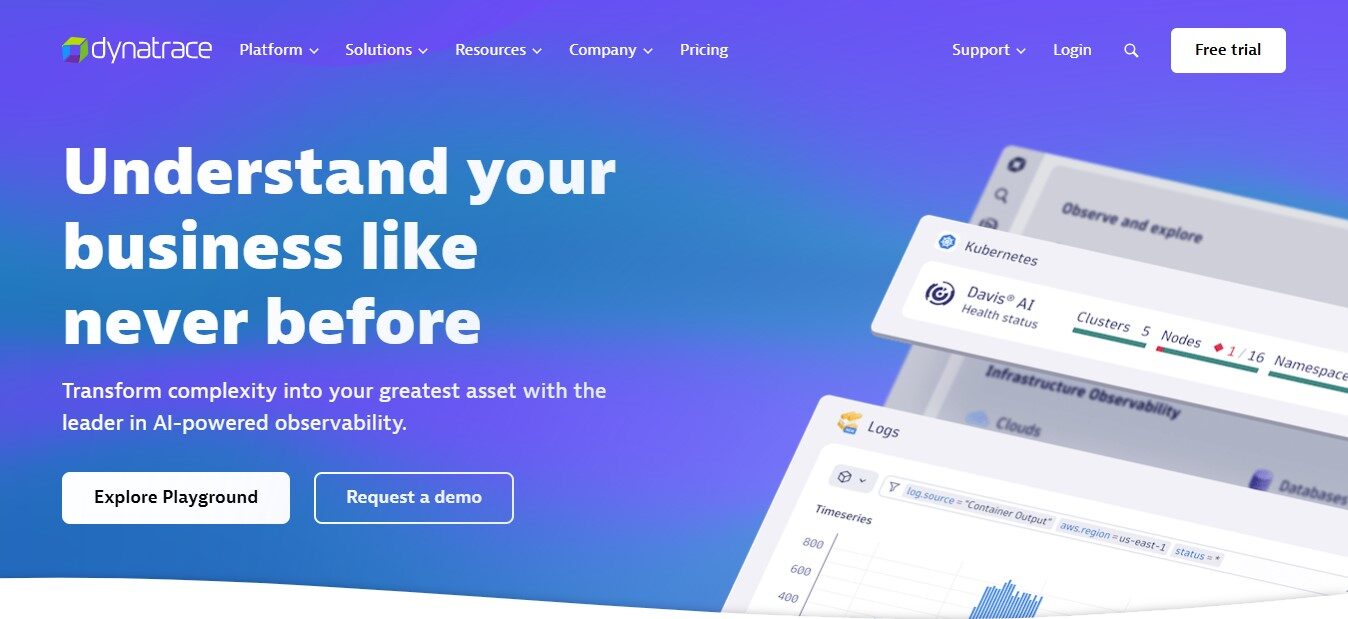
Dynatrace’s AI-powered observability, combined with auto instrumentation (OneAgent) and the built-in Davis AI engine, gives strong full-stack coverage.
- Strengths: Very automated, reduces manual effort in observability setup.
- Use case: Large enterprises with complex infrastructure seeking scalable automation.
4. New Relic
This tool continues to position itself as one of the suitable full-stack observability platforms, with the help of emerging smartly with AI/ML trace and monster performance accurately.
- Strengths: It comes with strong code-level insights and a broader integration ecosystem.
- Use case: Organisations needing both infrastructure observability and in-depth application/model-level insights.
5. Elastic Observability (ELK + APM)
Evolving from the ELK (Elasticsearch, Logstash, Kibana) stack, Elastic Observability unifies logs, metrics, and traces, now with added AI telemetry capabilities.
- Strengths: Strong log search, flexibility, and hybrid deployment options.
- Use case: Teams already using Elastic stacks and looking to add AI observability.
6. SigNoz
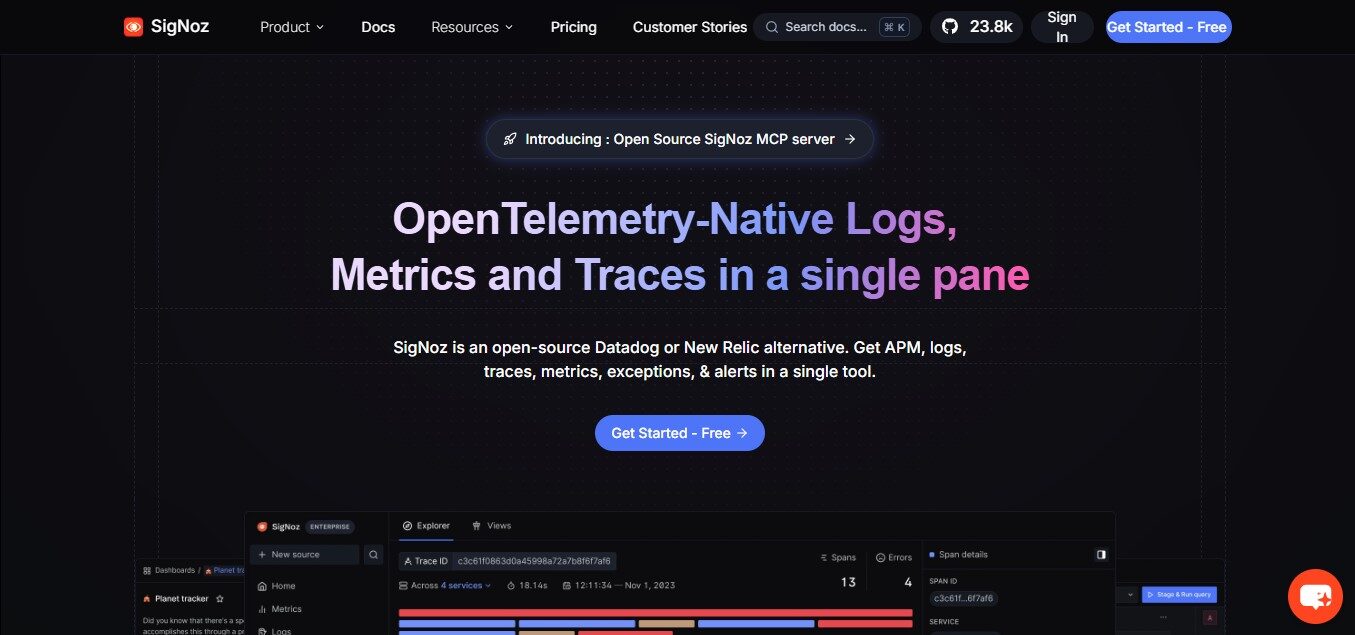
SigNoz is a modern open-source observability platform built around OpenTelemetry, offering logs, metrics, and traces in one application.
- Strengths: Open-source, actively developed, with a focus on observability suitable practices.
- Use case: Teams wanting a full open-source observability foundation that can evolve to support AI.
7. AgentOps.ai
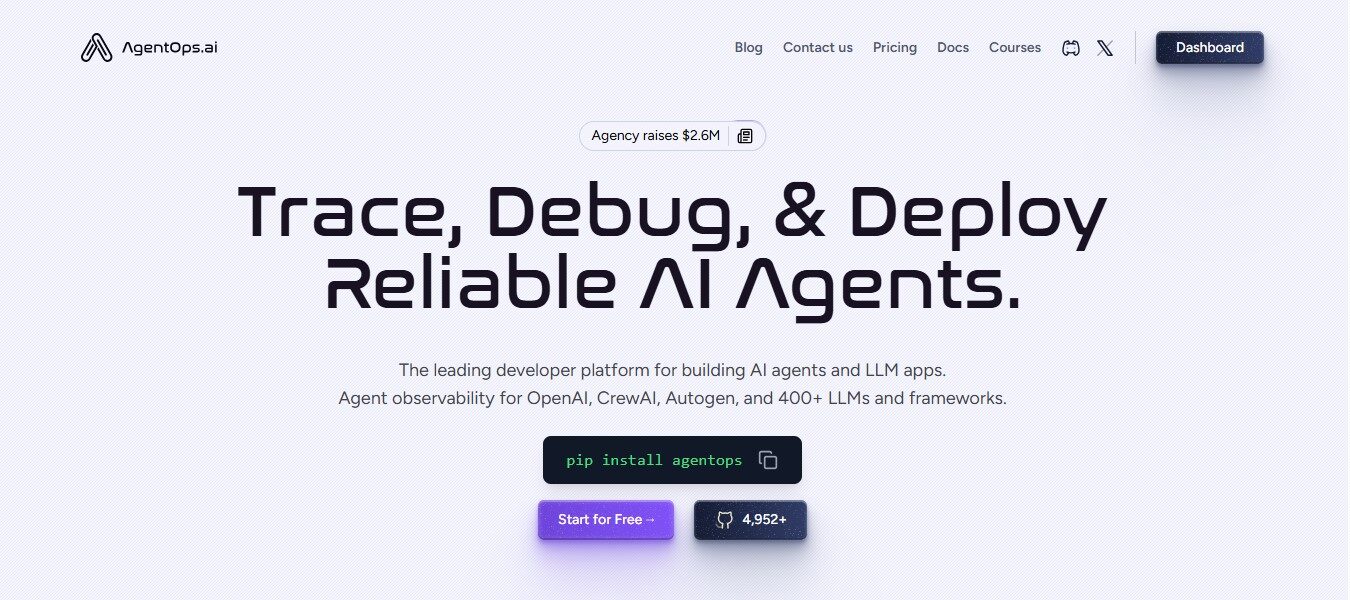
AgentOps is focused on AI agents and LLM-backed apps, providing replay analytics, LLM cost tracking (400+ providers), event tracking, and observability for AI agents.
- Strengths: Very targeted to agent / LLM observability, with event-level insights.
- Use case: Teams building autonomous agents or complex LLM-based systems.
8. ServiceNow Cloud Observability (formerly Lightstep)
This platform combines observability and context-aware insight, particularly for distributed systems and AI pipelines.
- Strengths: Good at change detection, linking deployments to performance.
- Use case: Teams wanting strong observability across microservices, plus AI layers.
9. Splunk Observability
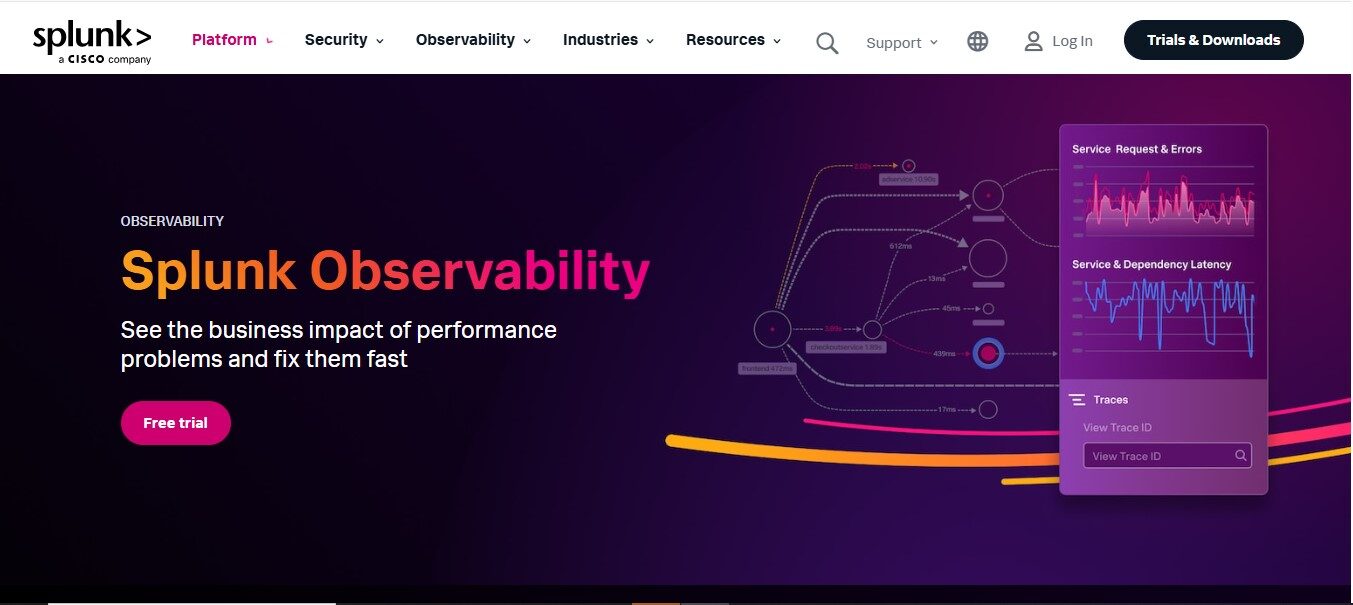
Splunk extends its core log/SIEM strength into observability, offering full-fidelity APM, distributed tracing, and anomaly analysis.
- Strengths: Excellent log-based correlation, powerful query engine.
- Use case: Enterprises needing observability + security / audit correlation.
10. vFunction
While not a “standard” observability tool, vFunction brings architectural observability to the table — correlating static and runtime analysis to detect technical debt, hidden dependencies, and structural anomalies.
- Strengths: Focus on architecture-level insight, beyond just runtime metrics.
- Use case: Organisations modernising legacy systems, needing observability that connects to design and architecture.
Observability Trends to Watch in 2025 and Beyond
- Integrating AI / ML into observability: Several platforms in the current digital market now offer root cause analysis, built-in anomaly detection, predictive analysis and noise filtering.
- Agent/multi-agent observability: As autonomous AI agents are emerging day by day, observability tools must capture inter-agent interactions and decision flow.
- OpenTelemetry momentum: Some of the great observatory tools support OTel to eliminate vendor lock-in.
- Telemetry-aware development: Embedding observability early (e.g., via Model Context Protocol) in code, not just production.
- Bridging architecture and runtime: Tools like vFunction that link static design with dynamic behaviour will gain traction.
Final Thoughts
An observability tool is basically software that can track the overall processes of an individual or machine, whether it’s in the fields of IT, healthcare, or tourism. By collecting and analysing telemetry data, like logs, traces, and metrics, it helps define accurate performance. In the current digital environment, every business wants to keep a constant record of its performance and long-term growth.
But when we talk about AI observability tools, they are smarter and faster. Unlike traditional monitoring, these tools empower teams to manage drafts, detect anomalies, guarantee ethical AI, and optimise the overall performance of their business.
Through open-source options, such as Phoniz, SigNoz, or any other enterprise platform, the end goal remains the same: building deeper, actionable, and visible insights. As the business continues to adopt AI on a large scale, constantly investing in robust observability is no longer an option; it’s a necessity for maintaining stability, trust, and innovation in the digital world.