
TechNow is an AI agency working from Berlin for Duisburg, building automation systems, machine learning pipelines and decision-support tools for companies in one of Germany's most industrially concentrated cities. From freight logistics at Europe's largest inland port to steel processing and chemicals, we design AI that fits Duisburg's actual business conditions.
lf you have any questions, please do get in touch with us!
Duisburg runs on throughput. The port moves more freight than any other inland terminal on the continent, the steel sector still defines large parts of the regional economy, and a dense network of mid-size logistics providers competes hard on margins. That is the commercial reality TechNow maps before starting any project. From Berlin, our team brings together data engineers, ML specialists and process analysts with backgrounds in heavy industry, supply chain and trade operations. We study existing workflows first. A client's actual data, not an assumed template, drives the architecture we propose. The result is AI that fits into what a business already does, rather than forcing a wholesale redesign. No premises in Duisburg? That is correct, and it is not a limitation. Structured methodology, clear milestone communication and outcomes your finance team can actually measure: those travel well. Every Ruhr client gets the same project discipline regardless of distance. AI agency
We guarantee you a better business transformation by futuristically working
We smartly identify the right massage and value positioning
Developing customized AI solutions which get aligned with your goals
Seamless integration of AI tools and continuous refining of models for maximizing performance
We deeply investigate the programs and will offer you ongoing support to manage its implementation.
We provide you continuous support and scalable options to drive long-term success
We deeply investigate the programs and will offer you ongoing support to manage its implementation.
We provide you continuous support and scalable options to drive long-term success
Strategy grounded in Duisburg's industrial and logistics realities, not generic sector templates
Berlin-based team experienced across heavy industry, supply chain and data-intensive manufacturing environments
Complete project coverage: discovery, build, integration, monitoring and iterative improvement
No black-box outputs: every system ships with clear documentation and explainability for non-technical stakeholders
Fixed milestones and transparent scope management keep projects on time and on budget
AI architectures designed to scale as transaction volumes or operational complexity increase
Remote-first delivery with structured check-ins, as rigorous as any on-site engagement
Duisburg's inland port is a global freight hub handling over 130 million tonnes a year. AI improves routing decisions, predicts container dwell times and reduces costly scheduling gaps across terminal and last-mile networks.
Output planning, quality-defect prediction and energy-consumption optimization are areas where machine learning delivers measurable waste reduction for steel producers, foundries and fabricators operating in the Ruhr corridor.
Tier-1 and Tier-2 suppliers serving Rhine-Ruhr assembly plants use AI-driven demand forecasting and supplier-risk monitoring to keep production lines moving without relying on oversized buffer stock.
Duisburg's Rhine-Ruhr trading companies benefit from AI-assisted procurement analytics, dynamic pricing models and fraud detection built for high-volume transaction environments across European and Asian trade corridors.
Process optimization models reduce energy consumption and improve batch consistency for chemical producers in the Ruhr industrial belt, where even marginal efficiency gains compound significantly at scale.
The University of Duisburg-Essen is one of Germany's larger research universities. AI tools accelerate literature analysis, research data management and grant-application workflows for academic and applied-research teams.






We start by mapping the precise bottlenecks, whether that is container scheduling, customs document processing or outbound route optimization. Predictive models and automation pipelines are then calibrated to the port's actual historical data patterns. Duisburg's throughput scale means even a two-percent efficiency gain translates to significant cost and time savings, so we focus the first phase on the highest-impact process before expanding scope.
We run structured remote engagements split into defined phases: a discovery workshop, an architecture review, iterative build sprints and a staged rollout with acceptance testing at each gate. Collaboration happens through video calls, shared documentation and a dedicated project channel. Clients receive weekly written progress updates and have a named point of contact throughout, so nothing falls into the gaps between meetings.
Mid-size businesses frequently see the fastest returns. A regional steel distributor using demand forecasting or a 40-person freight forwarder automating invoice processing can recover project costs within months, not years. Scope and budget are matched from the outset: we do not propose a large-scale data platform when a focused automation script solves the actual problem. The starting point is always the business case, not the technology.
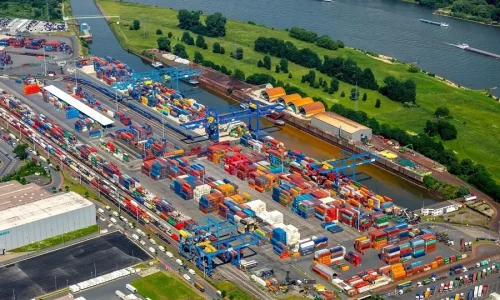
The Port of Duisburg is known for handling one of the major freight traffic in Europe. Duisburg’s port is an important logistics centre for goods entering Europe. The port at Duisburg is also considered the “seaport” because all the sea-going river vessels have access to the ports in Africa, Europe and the Middle East.
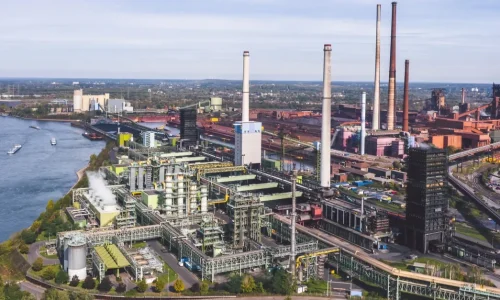
The city of Duisburg has always been known for its Industry Hub, which has been successfully contributing towards the production of a substantial amount of crude steel and pig iron for Germany. In the early 20th century, the city of Duisburg experienced a major boom fueled by its industrial activities.
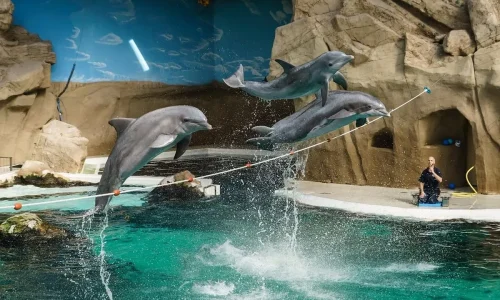
The Tiger and Turtle- Magic Mountain is a unique art installation which resembles a rollercoaster, offering panoramic views. The Zoo in the city of Duisburg is a major popular attraction for its diverse animal collection and conservation efforts. The University of Germany is the largest university contributing to the city’s academic and cultural landscape.